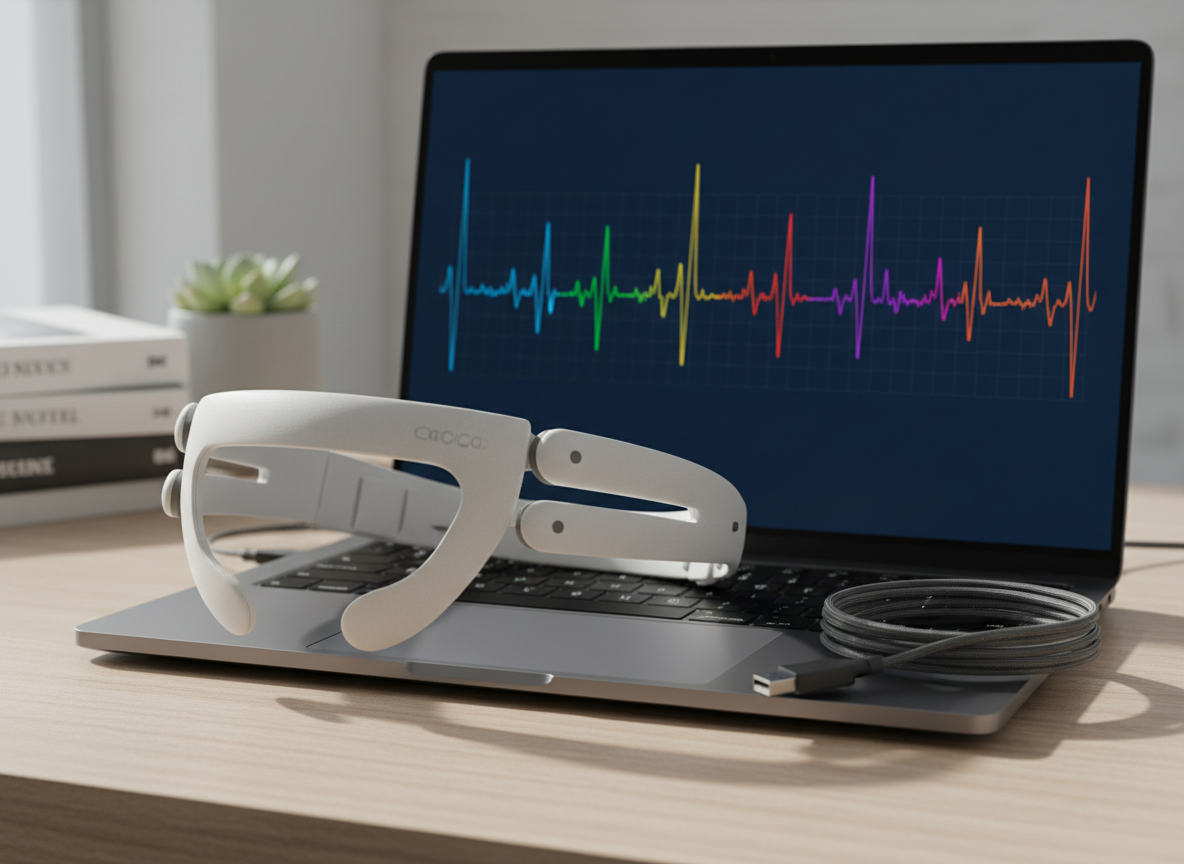
A sleek OpenBCI EEG headset made of matte white plastic with finely textured, adjustable sensor arms, resting on a dark graphite laptop beside a neatly coiled shielded USB cable. The laptop screen displays a clean, modern EEG waveform dashboard with multiple colored channels scrolling in real time against a deep navy background. Soft daylight from a nearby window washes across a light wood desk, creating subtle reflections on the headset’s curved surfaces and gentle shadows beneath the devices. Captured at eye level with a shallow depth of field that keeps the headset and screen in sharp focus while the background blurs. The mood is professional, precise, and methodical, with photographic realism and a minimalist, lab-ready aesthetic.

About Chris

Why I share open-source EEG builds, neurofeedback experiments, and guides for working with brain signals.

About

I’m Chris, a neurotech tinkerer building open-source EEG tools with OpenBCI, custom hardware, and Python software. This blog shares experiments, tutorials, and hard-earned lessons to help you explore your own brain-computer interface projects.
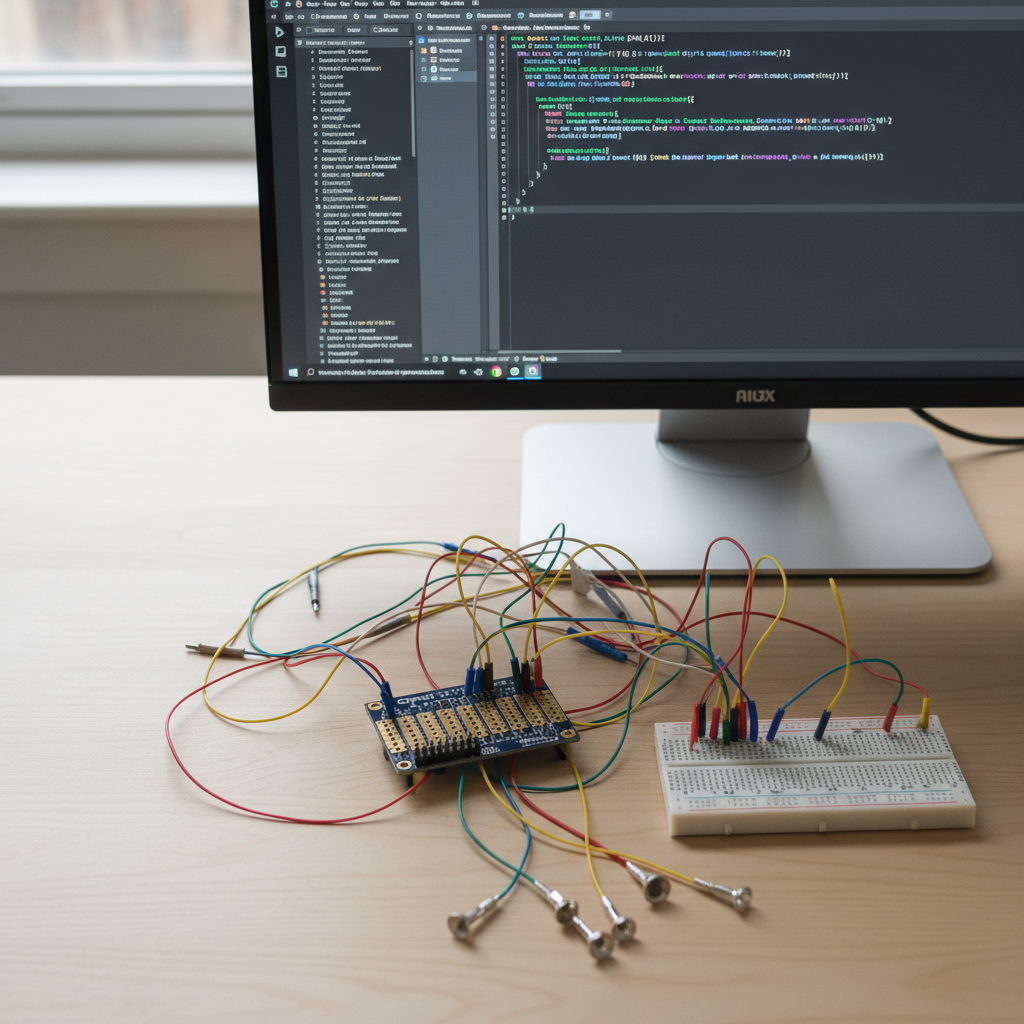
A close-up, top-down photographic view of a custom EEG prototyping workspace on a pale birch desktop. A compact OpenBCI board with exposed gold-plated pads and neatly soldered headers sits at the center, surrounded by color-coded jumper wires, a small breadboard, and labeled electrode leads. A high-resolution monitor in the upper edge of the frame shows a clean, modern IDE with EEG signal processing code in cool-toned syntax highlighting. Diffused overcast light from an unseen window creates even illumination, with soft shadows that define each component’s edges. The composition follows the rule of thirds, emphasizing technical clarity and order. The atmosphere is focused and quietly intense, perfect for deep engineering work in neurotechnology.
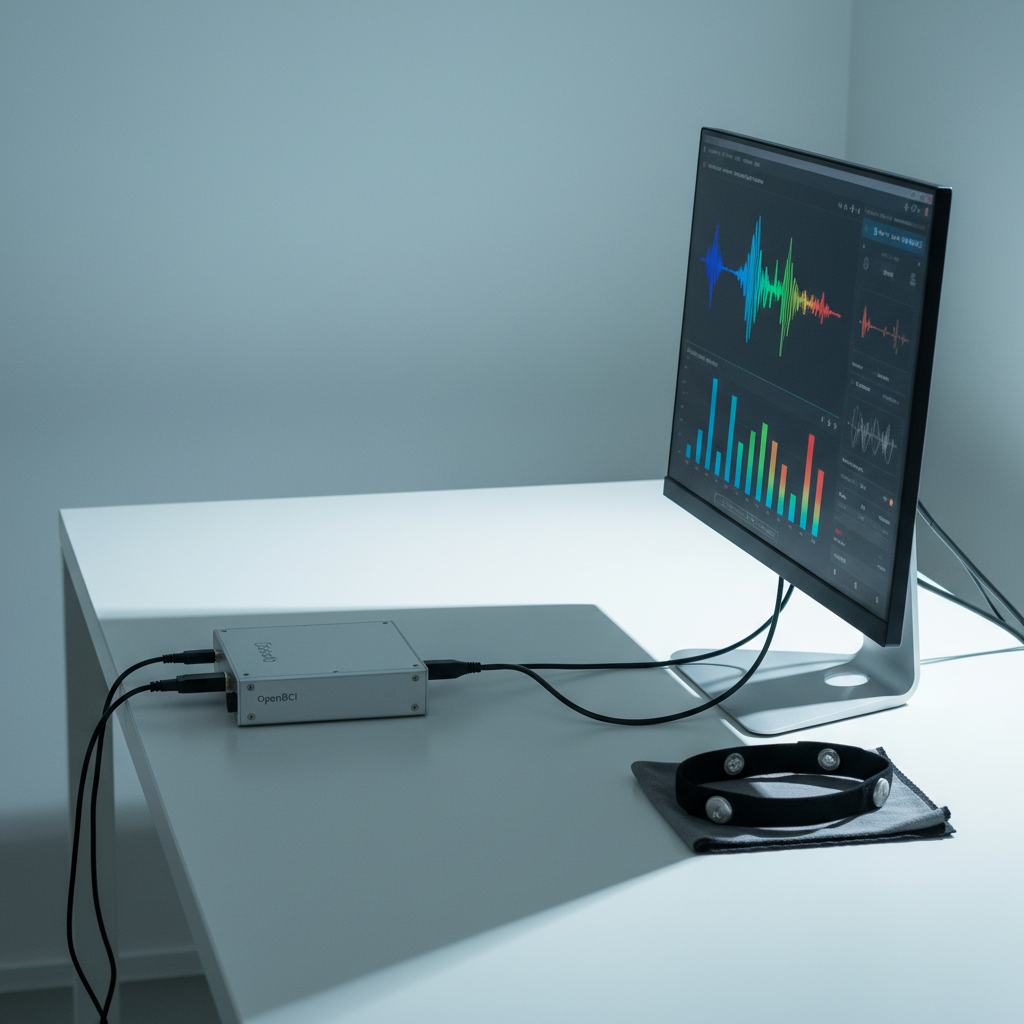
A high-contrast, photographic side view of a minimal neurofeedback setup on a clean white desk. A compact OpenBCI EEG amplifier in brushed aluminum housing connects via neatly routed cables to a slim monitor displaying a smooth, colorful neurofeedback interface with responsive bar graphs and animated brainwave bands. Next to it, a simple black headband with embedded dry electrodes rests on a folded microfiber cloth. Cool, directional LED lighting from the left creates precise highlights on the metal edges and faint reflections on the monitor glass, casting crisp shadows on the desk. The composition uses asymmetrical balance, with plenty of negative space to feel modern, clinical, and highly professional.

Explore DIY Neurotech Projects

Whether you’re new to EEG or already hacking OpenBCI, you’ll find project write-ups, code snippets, hardware tips, and conceptual explainers, all tagged by skill level so you can jump in where the challenge feels right.